Insights
Every Empty Court Has a Cost
Bob Lorincz · Co-Founder, Pickleball 365 ·
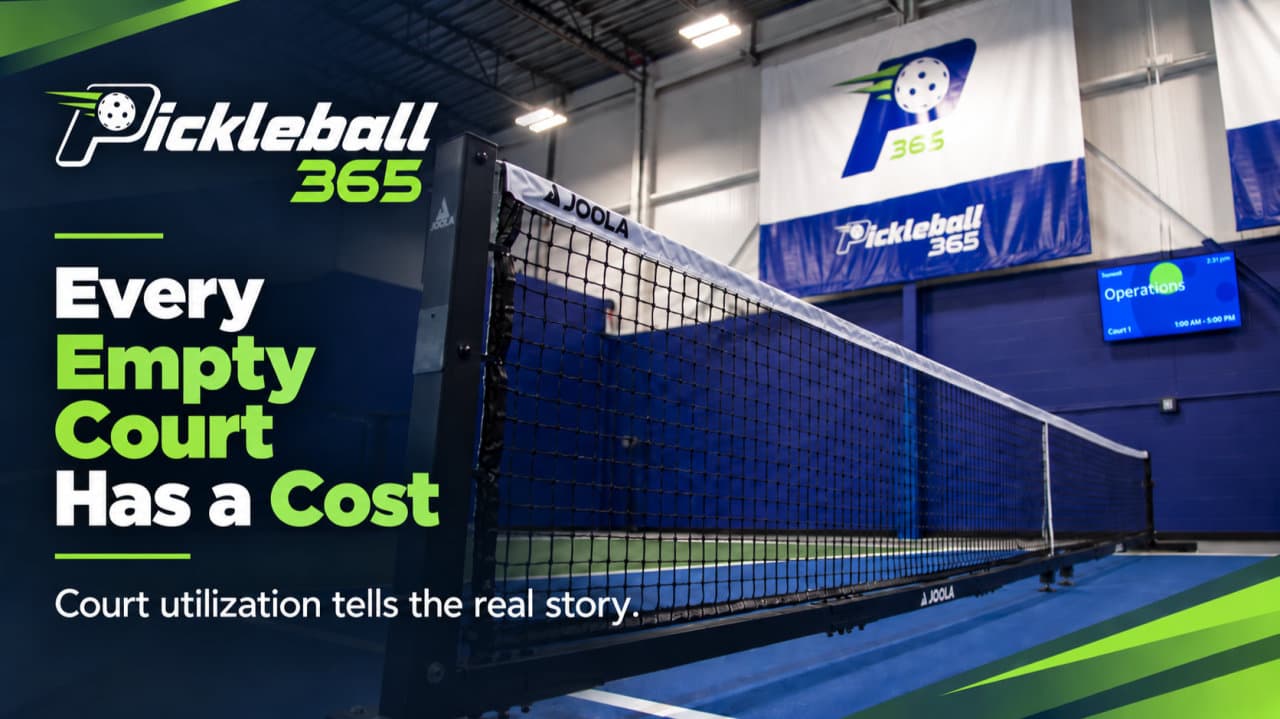
One of the things I notice now when I walk into a pickleball facility is probably different from what most players notice. Players tend to look at the court surface, lighting, nets and overall atmosphere. I look at the empty courts.
That comes from being an operator. Once you own a facility, a court is no longer simply a place to play. It is square footage you are paying for whether someone is standing on it or not. Rent is attached to that space, along with climate control, lighting, maintenance, insurance and the other costs of operating a commercial facility.
A facility can look fantastic at 6:00 on a Tuesday night. Every court is full, the energy is high and it feels like everything is working. I have learned to pay just as much attention to Tuesday at 10:00 in the morning, Wednesday at 2:00 in the afternoon, or later in the evening when natural demand begins to taper off. Those hours tell you something different about the business.
When we opened Pickleball 365, we had to learn how people wanted to use the facility throughout the entire day. That meant watching behavior, testing programming, adjusting schedules and looking for demand outside the obvious peak periods.
Patterns began to emerge. Some players loved early mornings. Retirees and people with flexible schedules could play during the day. Youth programming fit naturally after school. Competitive players often preferred evenings. Shift workers and night owls wanted hours that many traditional facilities could not offer.
That experience taught us that utilization does not simply happen. Operators can influence it. Programming can influence it. Pricing can influence it. Coaching, communication and convenient access can influence it. The better you understand your players, the more opportunities you have to create activity during hours that might otherwise remain quiet.
This is why I believe the industry will eventually talk much more about utilization per court than total court count. A facility with fifteen or twenty courts may be impressive, but every one of those courts needs demand. The fixed expenses continue whether the courts are full or empty.
Hotels measure occupied rooms. Airlines measure filled seats. Manufacturers measure how productively their equipment is used. Indoor pickleball needs the same discipline.
The question is not only how many courts a market can absorb on opening day. The question is how often those courts can be used across a full week, a full season and a full year.
Sometimes the most expensive court in the building is the one nobody is using.
I’d invite you to take a closer look at how we think about court utilization at Pickleball 365 and why productive courts tell us far more than court count alone.